

Nutriguard-MS vs Tanita BC-601
Nutriguard-MS and Tanita BC-601: compare documented specifications, features and limitations. Check the reports and explanation offered by the provider. More features alone do not establish better accuracy.
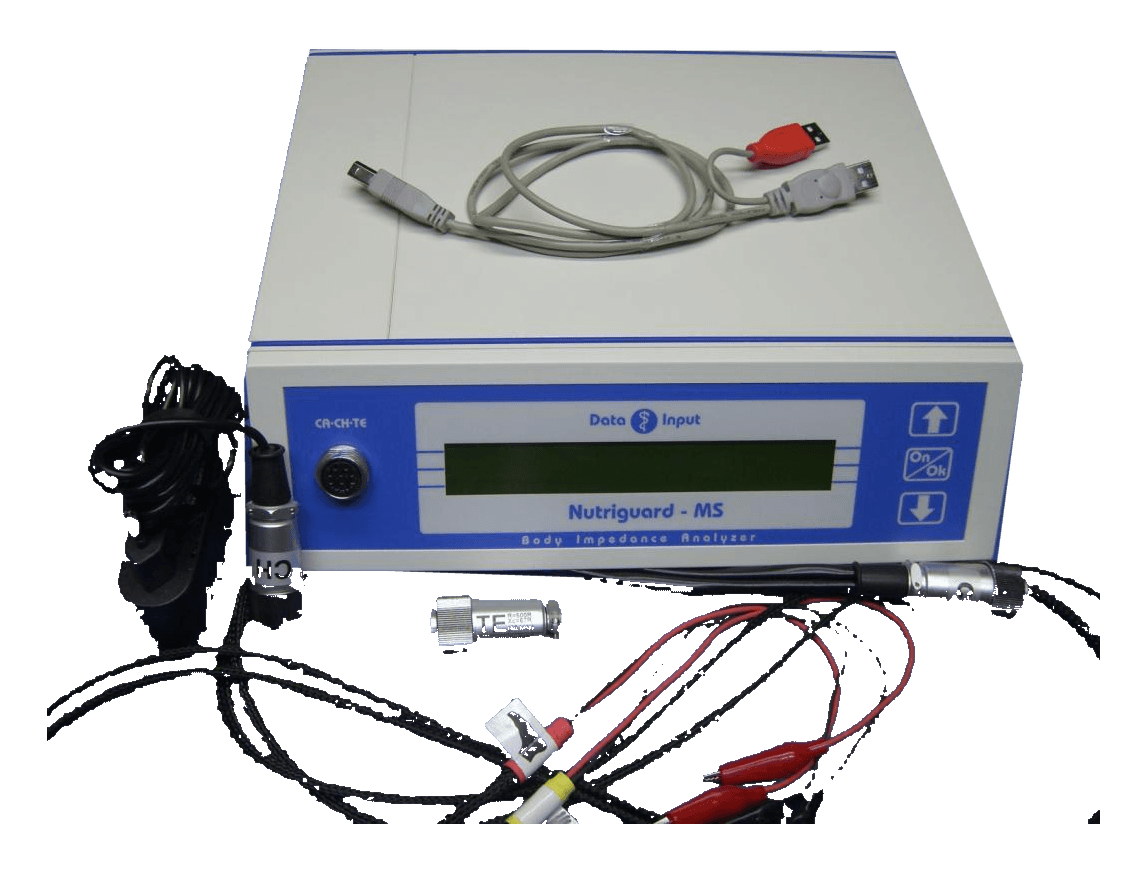

Nutriguard-MS: when to consider it
Nutriguard-MS measures bioelectrical impedance at 5, 50 and 100 kHz. Standard testing uses four adhesive electrodes on the hand and foot of one side. Body-composition and water estimates are evaluated from resistance and reactance using the relevant software; regional mode requires the appropriate procedure.
Tanita BC-601: when to consider it
BC-601 is a segmental scale for tracking fat and muscle mass in five body regions. Its display sits on a pull-up handle and results can be stored on an SD card. Weight capacity is 150 kg; consistent preparation and interpretation matter when comparing changes.
Specifications side by side
Highlighted rows differ. Unknown values stay unknown.
| Specifications | Nutriguard-MS | Tanita BC-601 |
|---|---|---|
| Method | Multi-frequency BIA | Bioelectrical impedance (BIA) |
| Measurement frequencies | 5, 50, 100 kHz | Not verified |
| Electrodes | 4 adhesive electrodes for whole-body testing | Not verified |
| Documented outputs | Resistance and reactance; body-composition interpretation through software | Whole-body and regional fat and muscle mass |
| Maximum weight | Not verified | 150 kg |
| Measured regions | Not verified | Both arms, both legs and trunk |
| Result display | Not verified | Handle display; SD card |
Fat-free mass is not pure muscle mass. A single result is not a diagnosis. Different devices and similarly named metrics may use definitions that are not interchangeable.