

BIA body composition testing
Bioelectrical impedance analysis (BIA) estimates fat and fat-free mass using an electrical measurement. Results may also include body water and an estimate of muscle mass. InBody and Tanita are brands of devices that use this method.
Open the BIA map · 163 locations →What BIA measures and what your report shows
Want to follow changes in your body as you adjust your exercise or eating habits? BIA gives you more information than weighing yourself alone. At your first appointment, ask someone to explain the results and help you decide which values to follow over time.
The device measures impedance, the body’s response to an electrical signal, and calculates further values from it. Depending on the model, these may include fat in kilograms and percent, body water or an estimate of muscle mass. Muscle is only part of fat-free mass, so these two values mean different things.
You may see a value called bone mass on your report. This does not tell you your bone density or replace an examination for osteoporosis. For that, you need bone densitometry.
What happens at an appointment
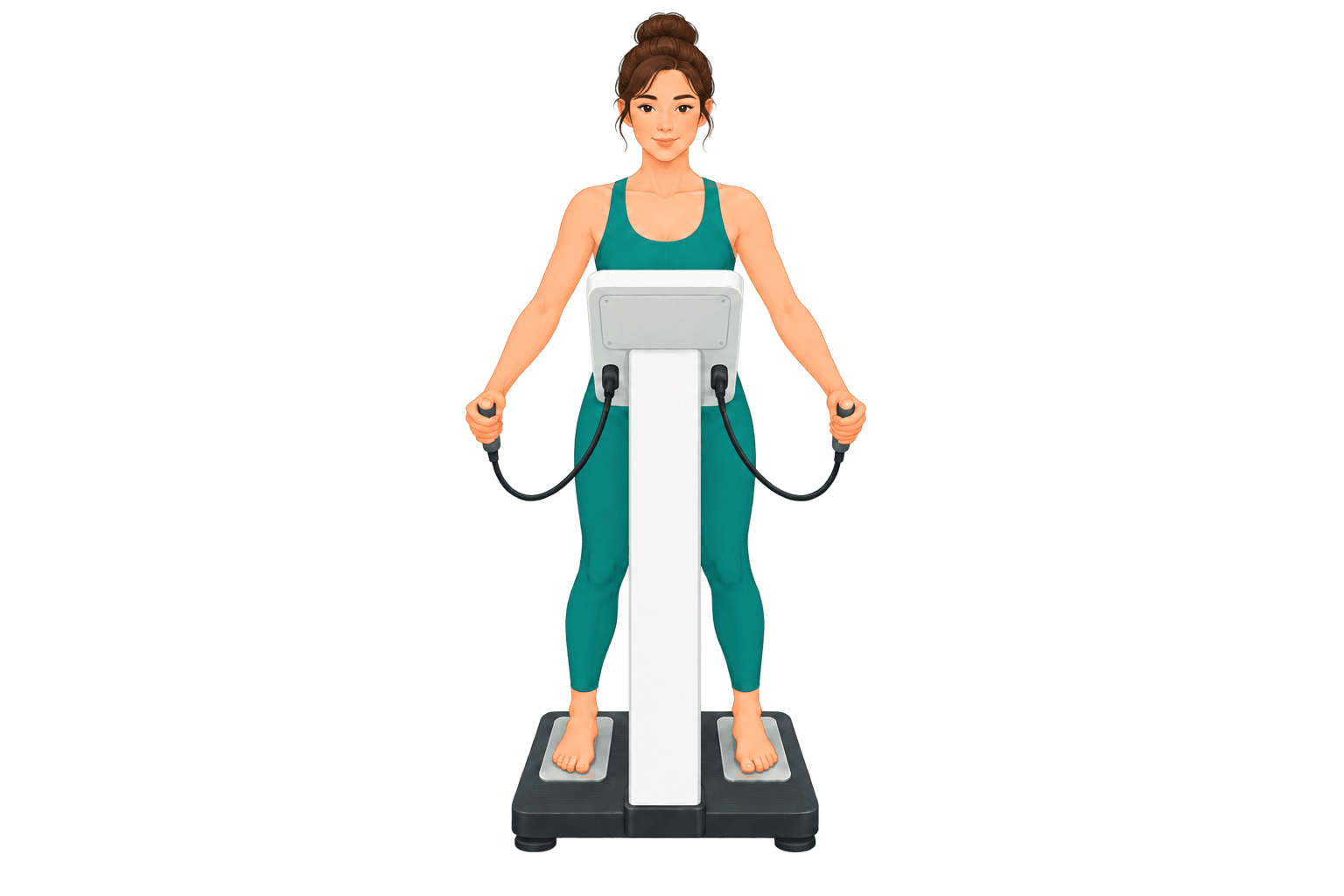
With common standing devices, you stand barefoot on electrodes and, on some models, hold hand grips. The operator shows you how to stand and enters the details needed for the test. The exact steps depend on the device.
When booking, ask how much time to allow, whether you will get a copy of your results and who will explain them. The test and consultation may be offered separately.
How to prepare for a BIA test
How much you have drunk, when you last ate and whether you have recently exercised can all affect the results. Ask for preparation instructions when you book. Try to arrive under similar conditions at later visits so your results are easier to compare.
- Check the required interval after meals and training, fluid intake guidance and the recommended time of day.
- If you have a pacemaker, defibrillator or another implanted electronic device, tell the provider before booking. They need to check whether testing is suitable under the device instructions.
- If you are pregnant, discuss in advance whether testing is suitable and how the results would be interpreted.
Reading results and repeating the test
If you are tracking changes over time, return to the same device where possible. Differences can also reflect hydration and preparation, so they may not just mean fat loss or muscle gain. If you go elsewhere, bring your previous results with you.
Keep your report and note when the test took place and how you prepared. Ask what the results mean for you and when another visit would be useful. Treat a score such as metabolic age as one piece of information, rather than an overall assessment of your health.
Price and choosing a provider
Choose BIA – body composition on the map and look for somewhere convenient to visit. Provider pages show the available information about the device, price and service. If no price is listed, ask before you book.
Find out what the price covers: one test, testing with a consultation, or a package of visits. If you want to use a benefit or gym membership, check whether it also covers body composition testing.
Common questions
Is InBody a different method from BIA?
No. InBody is a device brand; BIA is the measurement method. Check individual model descriptions for differences between devices.
Can BIA detect osteoporosis?
A BIA bone mass estimate does not replace bone densitometry. For a bone examination, choose a service explicitly concerned with bone density.
Should I book a test only or a consultation as well?
At a first appointment, it helps to have time for questions. Ask whether someone will explain your results and whether that consultation is included or booked separately.
Why can two measurements differ?
The device and testing conditions, including hydration, both matter. If a change surprises you, go through the results with the operator and consider how you prepared for each visit.
Find a location in Slovakia
Find a location near you, compare prices and choose where to book.
Open the BIA map · 163 locations →Explore related tests
Sources and further reading (7)
- InBody — Body composition and bioelectrical impedance
- TANITA — How does TANITA measure body composition?
- InBody USA — The InBody Test: preparation and procedure
- InBody UK — Frequently asked questions
- TANITA — Understanding your measurements
- TANITA DC-360 — Instruction Manual, page 24: Estimated Bone Mass
- TANITA — How to best measure and monitor your body composition